
How Packaging Specs Get Set for Pottery and Ceramics Made in Vietnam

Updated: Aug 21
The breakage claim lands in your inbox three weeks after the container cleared customs. Somewhere between 8% and 12% of the shipment, bowls, vases, decorative pieces, arrived cracked or chipped. The factory says it packed everything correctly. The freight forwarder says it was handled normally. And you're left holding a loss that nobody is volunteering to own.
In most cases like this, the problem didn't start on the ship. It started months earlier, when packaging was treated as something the factory would "just handle", rather than a set of specifications that needed to be defined, written down, verified during production, and signed off before the first carton was sealed.
For pottery, ceramics, and fragile homeware sourced from Vietnam, packaging is a quality decision. And like every quality decision, it needs someone to own it. Here's how it actually works.
Who Actually Sets the Packaging Spec, You or the Factory?

This is where most importers get into trouble: they assume the factory knows best, because the factory has been shipping ceramics for years. That's partially true. Experienced Vietnamese ceramic factories do know how to pack their standard products. What they don't know, unless you tell them, is how your product will move through your distribution chain.
A factory packing for a local wholesale buyer in Southeast Asia has different requirements than a factory packing for an importer whose goods will be received at a US fulfillment center, broken down by SKU, stored on warehouse racking, and then shipped individually to end customers. Those are entirely different stress environments. The carton that survives the first journey may not survive the second.
This is why packaging spec ownership sits with the buyer, not the factory. The factory understands the product. The buyer understands the destination. The spec document is where those two things meet, and if it doesn't exist in writing, the factory will make decisions based on cost and habit.
What Are Packaging Specifications?
A proper packaging specification for fragile home goods isn't a paragraph in the purchase order that says "pack carefully." It's a document that tells a supplier exactly how to package every unit, consistently, across the full production run, every time.
A packaging spec for fragile home goods typically covers:
Individual protective materials (wrap type, minimum thickness, density)
Inner box construction and dimensions
Master carton requirements (wall construction, burst strength, ECT rating)
Foam or pulp insert design
Poly bag specifications
Carton drop-test requirements
Shipping marks and label placement
Barcode placement and spec
Pallet configuration
Moisture protection requirements
Without a written spec, every one of those decisions defaults to the factory. And factory defaults are almost always optimized for their cost, not your breakage rate.
How Packaging Gets Developed for Ceramics and Fragile Home Décor

Unlike durable goods, ceramics require packaging that can absorb repeated impacts across the entire supply chain, not just one drop from a loading dock. The development process starts by working through four variables.
1. Product Characteristics: Start With What the Product Is Actually Made Of
Before choosing any wrap material or carton specification, the first question is simple:
What is this product actually made of?
"Ceramics and pottery" is a broad category. The material body, including the clay composition and firing process, determines how a piece behaves under mechanical stress, how it responds to moisture and temperature changes in transit, and what surface finishes it can hold.
Each of these factors feeds directly into packaging decisions.
1.1 The Five Material Types You'll Commonly Encounter in Vietnamese Production
Terracotta

Low-fired earthenware with a porous, unglazed or partially glazed body.
Relatively heavy for its size
Chips at edges more easily than denser ceramics
More moisture-sensitive than its rustic appearance suggests
Common in planters, garden décor, and handcrafted decorative pieces
The porous surface can absorb wrap materials that press against it over long transits
That last point is worth considering when specifying inner wrap.
Earthenware

This includes clay and natural earth-body pieces fired at lower temperatures than stoneware.
More brittle
More prone to thermal shock
Surface glazes are softer and more vulnerable to contact marks
Requires careful individual wrapping
Pieces should never be in direct contact with other units or the carton wall
Stoneware

Denser, heavier, and more durable than earthenware. It is fired at higher temperatures, producing a harder and less porous body.
Common applications include tableware, mugs, bowls, and decorative homeware. Stoneware is more forgiving than terracotta or earthenware, but it still needs proper cushioning, particularly around handles and rims. Its weight is often the primary packaging driver. A 400 g stoneware mug requires a meaningfully different carton configuration than a terracotta pot of similar dimensions.
Porcelain

The densest and highest-fired of the traditional ceramics. It is typically thin-walled, non-porous, and used for tableware, fine decorative pieces, and products with detailed surface work.
Its combination of low weight and high surface sensitivity makes it one of the more demanding packaging challenges. High-gloss glazes can mark easily. The thinness that makes porcelain elegant is also the thinness that can crack. It generally requires more individual wrap layers and more careful divider sizing than stoneware equivalents.
MGO (Magnesium Oxide)
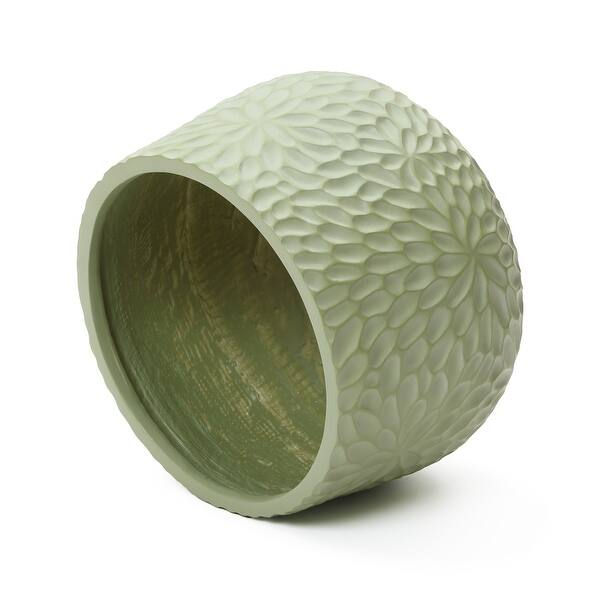
A faux ceramic composite increasingly common in outdoor and garden homeware. It looks and photographs like natural ceramic, but its material behavior is fundamentally different.
The key packaging implication is moisture. MGO products can sweat, particularly in humid conditions or during long ocean transits. Moisture can condense on the surface from inside. Sealing MGO pieces in a fully closed poly bag can create the conditions for moisture to accumulate, potentially causing surface damage or mold growth.
For MGO pieces going on ocean freight:
Use breathable wrapping
Avoid fully sealed poly packaging
Allow moisture to dissipate
Understanding which material body you're sourcing is not a detail. It's the starting point for every packaging decision that follows.

Working Through Packaging for Vietnam Ceramics?
Our product development and QA/QC teams work the full cycle - packaging spec, inline verification, pre-shipment confirmation.
2. Shipping Journey
Packaging that survives factory-to-port doesn't automatically survive port-to-warehouse-to-retail. The spec should be designed around the complete transportation route, not just the first leg.
Key questions to answer before finalizing materials:
Ocean freight or air? (Ocean: longer vibration exposure, container compression; air: more impact events, faster but shorter)
How many warehouses will handle the cartons before they reach the end customer?
Will cartons be palletized and stacked?
Will retailers break pallets and handle individual cartons?
Is this ecommerce fulfillment, meaning individual cartons shipped via parcel carriers?
Each additional handling point is an additional impact risk. A product going direct-container to a single retail DC needs different protection than one moving through a 3PL, then a regional DC, then a last-mile parcel network. The more handling stages involved, the more the packaging needs to be engineered to absorb cumulative stress, not just individual events.
3. Protective Materials: Match Them to the Product, Market, and Journey

There's no universal correct material for ceramics and pottery.
The right combination depends on four things:
The product's material body and surface finish
The shipping route and transit time
The destination market's requirements
Cost targets
3.1 The Bubble Wrap Limitation Most Buyers Don't Know About
Bubble wrap is the default assumption for fragile goods. For ceramics and pottery, it is often not the best choice.
There are two main concerns:
Moisture during long ocean transits — Vietnam to the US West Coast can take three to five weeks, with longer transit times to the East Coast or Europe. Wrapping all surfaces in bubble wrap, or using sealed poly bags without ventilation holes, can trap moisture against the product surface during long ocean transits. Over time, that trapped moisture can contribute to surface damage, moisture marks, or mold, especially in humid shipping conditions.
Surface imprinting — Bubble wrap and textured wrapping materials can leave imprints on certain ceramic finishes, particularly soft glazes, matte surfaces, and unglazed terracotta. After sustained contact under pressure, the pattern of the wrap can transfer to the product.
For many pottery and ceramic categories, EPE foam wrap or PE foam sheet is preferable because it provides a softer contact surface, better compression behavior over time, lower risk of texture transfer, and is widely available in Vietnamese factories.
If bubble wrap is used, it is typically better suited as a secondary outer layer rather than direct-contact inner wrap.
3.2 US Market vs. EU Market: Why the Destination Matters
Packaging material choices are not only a product decision. They can also be a market compliance decision. The US and EU operate under meaningfully different packaging frameworks.
For the US market: EPE foam, PE film outer wrap, and standard corrugated carton construction are widely used. The main drivers are retailer preference, cost, and product protection performance.
For the EU market: Packaging requirements are more restrictive and continue to tighten under the EU Packaging and Packaging Waste Regulation. LDPE film and foam-based materials are permitted but subject to requirements around quantities and recyclability. Paper-based alternatives are increasingly preferred, including kraft paper wrapping, honeycomb void fill, molded pulp inserts, and corrugated dividers.
For EU retail, check the customer's packaging policy before specifying foam-based materials.
3.3 Material-by-Material Guide

EPE (Expanded Polyethylene) foam wrap
The most practical choice for direct-contact individual wrapping on many pottery and ceramic pieces shipping to the US. Provides good shock absorption, soft surface contact, and no texture transfer risk. Specify density in kg/m³, not just thickness. For standard homeware, 15 to 20 kg/m³ is typically used. Thickness alone does not tell you enough about cushioning performance.
PE film (polyethylene film/shrink wrap)
Used as an outer moisture barrier for pieces going to the US market, particularly for ocean freight. It can protect the foam-wrapped piece against humidity exposure inside the container. It is not suitable as a direct-contact wrap for porous surfaces such as terracotta and earthenware because it can trap surface moisture against the piece.
Kraft paper
A preferred wrapping material for many EU-bound shipments. Multiple layers can provide cushioning and surface protection. Fully recyclable with no major regulatory concerns. It is less effective than foam for impact absorption on heavy pieces, so it is often combined with honeycomb paper for larger products.
Molded pulp inserts
Engineered paper inserts custom-formed to cradle a specific piece. Key benefits include good distribution of surface contact, reduced pressure points, and biodegradability. Increasingly specified by major US and European retailers with sustainability commitments. The trade-off is tooling cost, making them easier to justify for high-volume, stable SKUs.
Honeycomb paper
Lightweight structural cushioning used for void fill, secondary wrapping, and stacking protection. Provides good compressive strength and is increasingly used as a foam substitute in EU-bound shipments.
Corrugated cell dividers
A standard inner-box partitioning solution for bowl sets, nested items, grouped vases, and multi-piece sets. Effective, low-cost, and available in different flute weights. Cell size matters: undersized cells allow pieces to contact divider walls under vibration; oversized cells allow movement inside the cell.
EPS (Expanded Polystyrene)
Still used in some Vietnamese factories, particularly for heavier or unusually shaped pieces. However, it is being phased out by buyers shipping to EU retail because of recyclability requirements and is increasingly discouraged by US retailers with sustainability commitments. If your factory defaults to EPS, ask whether a suitable alternative can be developed.
3.4 The MGO Exception: Don't Seal It
MGO composite pieces require a specific deviation from standard packaging practice. MGO can produce surface condensation during long ocean transits. Sealing the piece inside a closed poly bag can create a moisture trap, potentially leading to surface damage, mold, or bloom.
For MGO pieces:
Use breathable material such as EPE foam or kraft paper
Avoid a sealed poly outer layer
Give the carton enough ventilation for condensation to dissipate
If a program includes MGO alongside natural ceramic or pottery, the packaging specification should distinguish between the two. They should not automatically share the same packaging standard.
4. Carton Specification: Match Box Strength to What's Inside
Carton selection for ceramics and pottery is not primarily a dimensional optimization problem. It is a structural decision based on product weight, carton gross weight, stacking conditions, transportation, and warehouse storage.
4.1 What Carton Ratings Should You Consider?
Two common corrugated carton ratings used for Vietnam export of home goods are:
175 lb Burst / 29 ECT — A common baseline for decorative pieces, medium-weight stoneware, earthenware planters, and similar products in the typical 1 to 5 kg per-unit range.
200 lb Burst / 32 ECT — Used for heavier products and higher-load configurations, including large-format planters, dense stoneware sets, heavy decorative objects, and cartons approaching or exceeding 15 kg gross weight. The 32 ECT rating provides higher compression resistance, which matters for stacking inside shipping containers and during warehouse storage.
One common carton failure is specifying 32 ECT where the product and loading configuration actually require 44 ECT. The carton can look perfectly fine before it is placed under sustained load.
4.2 Carton Dimensions Also Affect Landed Cost
Master carton dimensions determine how many units can be loaded per container. Once a carton die-line and insert are tooled and approved, changing the dimensions later can mean reworking packaging drawings, labels, inserts, pallet configurations, and container loading plans.
The right time to finalize carton dimensions is before the product specification is locked, not after.
4.3 Units Per Carton and Weight Distribution
Units per carton are typically constrained by a 15 to 20 kg gross weight manual handling limit, depending on customer and destination requirements.
Weight distribution also matters during container loading:
Heavier cartons should generally be placed on lower layers
Fragile pieces should not be placed at the bottom of a stacked configuration
Carton strength should match the weight and stacking load
The objective is not simply to use the strongest carton available. It is to match the carton construction to the actual product, loading pattern, and distribution conditions.
How Packaging Is Validated Before Mass Production

Writing the spec is not the same as confirming it works. Packaging for ceramics should go through physical validation before any full production run begins.
1. Prototype Packaging Review
Before committing to materials and structure, a physical mock-up of the packaging, called a white dummy, should be built and reviewed with the actual product inside. Packaging prototypes reveal structural failures, material fit issues, and functional weaknesses that digital renders miss, at the lowest possible cost before production begins.
2. Packing Trials
A packing trial runs the approved packaging with a small batch of actual production units, packed by factory workers at production speed. This confirms that the assembly sequence is practical, that workers can consistently achieve the spec, and that the packaging actually fits the product as produced, not just as designed.
3. Drop Testing
The International Safe Transit Association (ISTA) publishes widely recognized testing procedures for evaluating whether packaging can survive distribution conditions.
ISTA 1A is the most broadly used standard for individual packaged products under 68 kg. The carton is dropped from a defined height onto each face, edge, and corner, then opened to inspect for product damage. For ceramics, any crack, chip, or shifted piece is a fail. ISTA testing can help identify packaging risks and reduce product loss and breakage by up to 30%.
4. Compression and Vibration Testing
For ocean freight shipments, drop testing alone doesn't replicate the full transit environment. Cartons stacked in a container are under continuous compression for weeks, and ocean freight exposes packaging to sustained vibration. For high-value or particularly fragile SKUs, compression and vibration testing should be added to the validation protocol.
5. The Golden Sample
Once packaging passes all validation steps, a sealed, fully-packed master carton is retained as the approved reference. This physical standard is what QC teams compare against during production, not the spec document alone.
When There's No Standard: Building Packaging Specs From Scratch

Not every buyer arrives with a packaging specification. In fact, most don't, particularly brands earlier in their sourcing journey or buyers who have been relying on factories to make these decisions and are only now dealing with the consequences.
1. There Is No Universal Packaging Standard
There's no universal drop test standard that applies to every buyer and every market. ISTA 1A is widely used and provides a sound baseline, but some retailers operate their own testing protocols. These requirements may not map directly to ISTA, and suppliers are expected to meet them regardless.
Inner box formats also vary by product type and cost position. Some ceramic programs use individual retail boxes; others use egg-cell configurations to reduce packaging costs on high-volume basics. The right answer depends on the product, the price tier, the retailer's requirements, the market, and what the buyer is actually trying to protect.
2. What If You Don't Already Have a Packaging Specification?
The work is to build one that fits the program. Start with:
Product characteristics — Material body, surface finish, weight, fragile points
Shipping journey — Factory handling, container transport, warehousing, final distribution
Destination requirements — Retailer packaging requirements, market requirements, sustainability expectations
Cost structure — Product price tier, packaging budget, shipping efficiency
The specification should be built around these inputs rather than applying a generic packaging template.
Why Packaging Verification Happens During DUPRO and PSI
Packaging development doesn't end when the spec is approved. It continues through every production run.
Quality teams verify during production that suppliers are actually using the approved materials, not substituting a thinner foam wrap, a single-wall carton where double-wall was specified, or omitting dividers to save time on the packing line. These substitutions happen. They're rarely announced.
Packaging verification is typically embedded in two inspection stages:
During DUPRO (inline inspection). When the QC team is on the factory floor at 20–40% production completion, packaging materials should be on the checklist: foam density, inner box stock weight, divider cell construction, carton wall spec. Catching an unauthorized substitution at this stage costs a phone call. Catching it at pre-shipment costs a rework.
During PSI (pre-shipment inspection). The carton drop test should be performed on a randomly selected carton from the finished lot, not cherry-picked by the factory. The inspector opens and inspects the product after the drop sequence. Photos document actual materials used, not what the spec says was used. This record protects the buyer in any breakage claim discussion and gives the factory a concrete reference for repeat orders.
For new suppliers or new SKUs, packaging verification at both stages is not optional. It's the only way to confirm that what was specified is what shipped.
Working With a Reliable Sourcing Partner in Asia
Setting the right packaging spec for ceramics or pottery—and making sure it's actually followed through production—is the kind of work that only holds up when someone with real accountability is managing it from within the supply chain.
Rockhill Asia is a sourcing and operations partner for US and European brands manufacturing home goods in Vietnam and across Asia. Founded in 2014 and based in Ho Chi Minh City, we work directly with factories—not through third-party brokers or remote inspection platforms—which means the team managing your supplier relationships is the same team on the factory floor when production is running.
Our work covers the full production cycle: supplier qualification, product development, quality assurance and control, shipment consolidation, and after-sales operations. For brands that don't have their own on-the-ground presence in Asia, we function as that presence, embedded in the supply chain, accountable to the outcome, and structured to protect the buyer's position at every stage.
Working Through Packaging for Vietnam Ceramics?
Our product development and QA/QC teams work the full cycle - packaging spec, inline verification, pre-shipment confirmation.


